White Weave
  
  • Log in / Register
  • OUR STORY

    THE MASHRU STORY

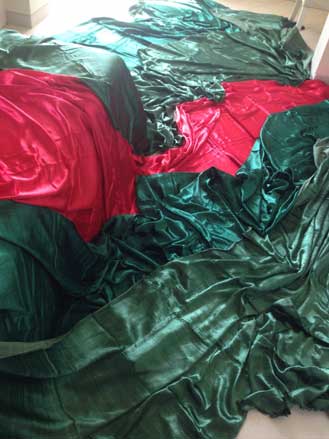
    We extensively use hand-woven "mashru" fabric for finishing and backing our pieces.

    The word 'mashru' is derived from Arabic for 'permitted by Islamic law'. It is a heritage warp face satin fabric composed of slik and cotton. Owing to the laws for men in Islam that restrains luxury in their lifestyle, silk could not be used by them. This "mashru" or "gajji" fabric was developed to give a rich feel of silk on the outersurface but only cotton yarn on the inside thus making it permissible to wear.

    There are a handful of mashru weavers surviving in India. We have explored this using traditional as well as contemporary raw materials and colours. It is celebration of its lost glory, two centuries after it has become antiquated.
    THE PATOLA STORY

    OUR PROMISE

  • ART
    • THE MASHRU STORY
    • THE PATOLA STORY
    • OUR PROMISE
  • COLLECTIONS
    • THE LEHER
    • THE GULMOHAR
    • THE MOR-PEECH
  • Shop
    • The Leher
    • The Gulmohar
    • The Mor-Peech
  • BLOG
  • FIND US

THE MASHRU STORY

We extensively use hand-woven "mashru" fabric for finishing and backing our pieces.

The word 'mashru' is derived from Arabic for 'permitted by Islamic law'. It is a heritage warp face satin fabric composed of slik and cotton. Owing to the laws for men in Islam that restrains luxury in their lifestyle, silk could not be used by them. This "mashru" or "gajji" fabric was developed to give a rich feel of silk on the outersurface but only cotton yarn on the inside thus making it permissible to wear.

There are a handful of mashru weavers surviving in India. We have explored this using traditional as well as contemporary raw materials and colours. It is celebration of its lost glory, two centuries after it has become antiquated.

THE PATOLA STORY

OUR PROMISE

© 2016 The White Weave. All rights reserved.
Terms and Condition
Delivery & Shipping Policy
Privacy Policy
Refund & Cancellation
Website maintained by Mirackle Solutions